
It’s a question as old as time itself: Can one person be forgiven for a sin that the majority of society sees as unforgivable at some point? There are a number of sinful actions that have been forgiven by history and others that were not considered sinful actions that later became so with history books as a judge. One of the original sins of capitalist societies is the grandeur of money and the willingness to want more of it. Working hard jobs will only get you so far if you’re a middle-class person. Salaries and wages might increase, but the costs of living and essential services only increase with time. Something has to give. You either stay where you are on the class spectrum or you try to increase your wealth with a bold move that could backfire and cost you everything. This is the basis for a lot of people in a society where gambling and betting on sporting events(and other taboo things) have become more acceptable than ever. Unfortunately, most people lose out on bets if they’re frequent gamblers and only a few end up being lucky and win constantly. Those select few are usually rich businessmen who get lucky when putting down a few bucks on the winning team or horse and get substantially richer off their bets. But this story isn’t about the average every-day American or the rich, greedy gambler. It’s about a couple of men who decided to commit a sinful act that one sports league had tried endlessly to purge for ages, but now they have a more welcoming and bullish attitude about that act. The league still enforces and forbids its players and coaches and other employees from doing one thing though: Betting on games that their team or any other team in the league is involved in. Even though these players have the money to spend and can easily afford high-priced housing more than most other people can, the league office enforces a hard line about betting on games(even when a player is not involved or participating in said games). It just can’t happen. If it does, then a harsh punishment will be cast onto the one who commits such an action. It’s all about upholding the integrity of the game, even though the league we are talking about has thwarted the integrity of the game with gambles in the form of rules changes in order to make their product more “appealing” to consume and “less boring” to watch for audiences throughout the nation.
The league I’m talking about of course is Major League Baseball, the sports league that represents America’s national pastime. Baseball is one of the most interesting sports in the world and it has produced a load of amazing stars that have saved it from irrelevancy and captivated audiences from the fresh warm feel of spring to the harsh weather that the autumn winds bring. MLB is the one sport where grit and determination are required the most: running the gauntlet for a 162-game regular season and for those teams who are good and lucky enough, they have to run another gauntlet in the form of the postseason with its ever-expanding rounds throughout the ages. Championships determine the legacies of franchises in whether they are seen as successful beacons of hope or dour failures that came up just a bit short. In terms of individual players, championships are just one piece of the puzzle. Other intangibles that are used to judge a baseball player’s career are statistics such as hits, runs, RBIs, home runs, batting average and steals. There are bunch of other stats that I won’t mention, but that’s basically the gist of it. Also there is the personal lens of how a player is judged based on their behavior and off-field lifestyles. Some players are seen in a better view because of their kindness and respect to their peers who played along them and respecting of the game of baseball itself as well. Meanwhile, there are others who are viewed in a more negative light because of their unwillingness to change their attitude to conform to the status quo or due to scandals that those players caught themselves into whether it had to do with baseball or something else. There are a load of things that can soil or ruin a baseball player’s legacy. On-field matters such as brawling with other players more than once(a minor infraction if that), arguing with your team’s manager and coaching staff along with the front office/ownership, cheating with tactics such as pine tar or other sticky stuff and other taboo things have defined the legacies of countless ball players whose names have been mostly lost to the dust of the past. The off-field stuff, however, is what people remember the most. The off-field stuff is what is used to bring down players’ legacies during their career or well after it ends. Off-field matters such as domestic abuse, drug usage, performance-enhancing drug consumption during a player’s career and especially betting on a game can be the dividing line between being remembered as a hero or being remembered as a disappointment. The last thing noted(betting on baseball) was something that was so bad over a hundred years ago that one team allegedly decided to not participate with full integrity of winning in the World Series and it forced the league to have its first ever commissioner, who was a literal judge that handed down a sentence of no forgiveness towards those players who were accused of “throwing the series”. Many decades after that incident, one player who ended up setting a new record for most hits ever recorded ended up being caught in a gambling scandal of his own doing, with MLB conducting an investigation into him as the manager of his beloved hometown team and eventually finding him guilty of committing that original sin and handing down a lifetime ban onto him.
The main victims involved in these “scandals” on gambling are none other than the top hitters of each of their generations. One of them was a top player in the generation born in the latter quarter of the 18th century and the other from the Silent Generation born during the Great Depression and World War II. Both of them have had movies and docuseries made referring to both of them and their downfalls due to betting on baseball or intentionally losing games in a World Series. And now both are in consideration for election into the Hall of Fame after MLB Commissioner Rob Manfred ruled that a person’s status on MLB’s permanently ineligible list ends upon that person’s death. Manfred made this announcement after years of public pressure to let one of these fallen idols become eligible for election into the Hall of Fame, but he granted this to occur only after that legend passed away several months ago. For the other star player who had the horrid privilege of being eternally barred from the National Baseball Hall of Fame museum in Cooperstown, New York, this comes nearly 75 years after he passed away. The two great all-time hitting legends who will now be eligible for election into the Hall of Fame in a few years are none other than Joseph Jefferson “Shoeless Joe” Jackson and Peter Edward Rose.
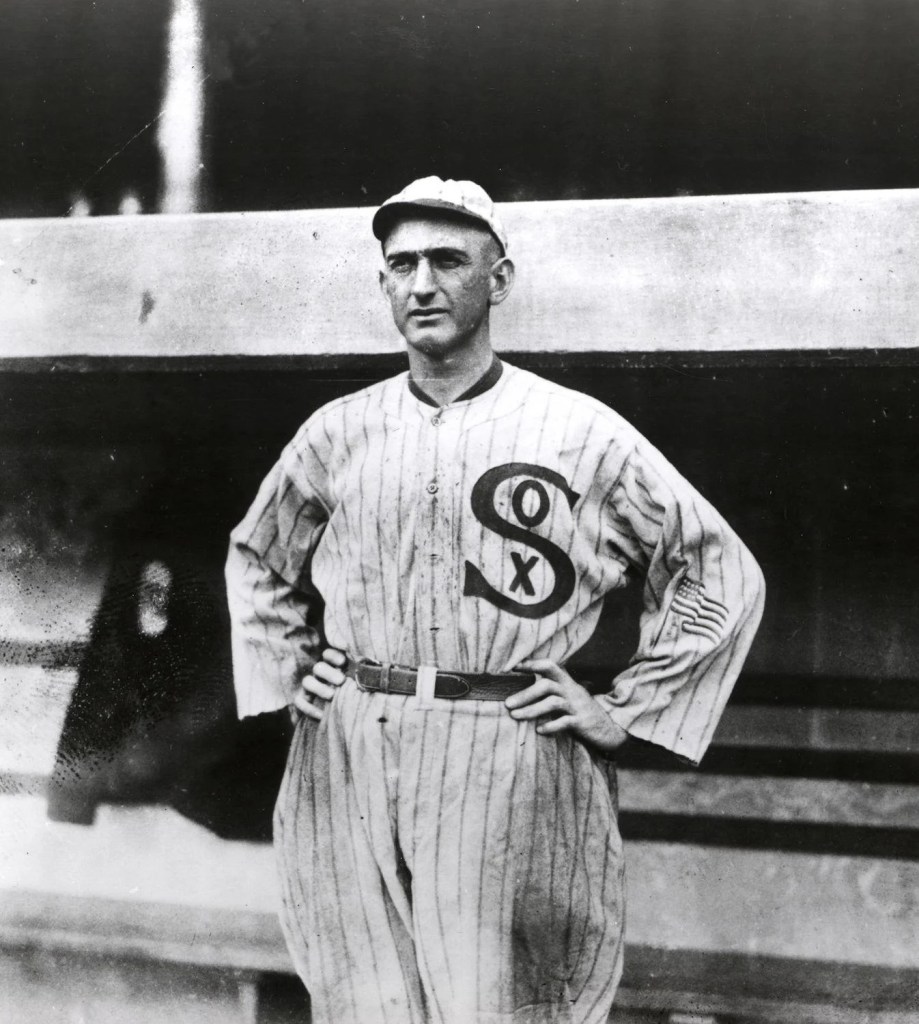
Arguably the two most famous players from the Classic Baseball Era(pre-1980s) not enshrined in Cooperstown, Jackson and Rose will finally have a chance to have their cases heard for why they should be elected into the Hall of Fame that is the hardest to get into in all of professional sports. Albeit it will be in posthumous fashion for both gentlemen whose legacies have been tainted due to the fact that they were both involved in two of the most infamous scandals in baseball history. Shoeless Joe was in his early-thirties when his Chicago White Sox played in the 1919 World Series against the Cincinnati Reds and he was accused along with plenty of his teammates of being involved with gamblers who wanted to see them lose the series of not playing with full integrity during the biggest games of the season. His teammates were more responsible than him for throwing the series due to him having a solid batting average of .375 in the series and he didn’t commit a fielding error, something that his fellow teammates were accused of doing during games that were lost to the Reds, who won the series in a best-of-nine games format five games to three. A scandal followed as there were eight players on the 1919 White Sox accused of not playing their hardest due to bribes of money from gamblers. Those eight players were Shoeless Joe Jackson, Buck Weaver, Eddie Cicotte(who had a valid reason to cheat due to being robbed of his 30th win of the season on the mound), Lefty Williams, Happy Felsch, Fred McMullin, Swede Risberg and Chick Gandil. They were considered the “Black Sox” and thus were put on trail in a federal courtroom for their cheating. A jury found the eight ballplayers not guilty of throwing the World Series(due to them trying to come from behind 3-1 on the Reds) and were seemingly free to continue their playing careers.
But Kenesaw Mountain Landis had a different point of view on the matter. Landis was installed by the owners(including White Sox owner Charlie Cominsky) as the first commissioner of Major League Baseball, having power that superseded those held by the presidents of the American and National Leagues. On the matter of the Black Sox players being in cahoots with the famous New York gambler Arnold Rothstein, who allegedly told some of them to throw the series(and that is probably how Jackson found out, through the players who interacted with Rothstein), Judge Landis said in his statement of deterrence “Regardless of the verdict of juries, no player that throws a ball game, no player that entertains proposals or promises to throw a game, no player that sits in a conference with a bunch of crooked players and gamblers where the ways and means of throwing games are discussed and does not promptly tell his club about it, will ever again play professional baseball”. This was a damming statement that put those players and a couple of others associated with the Black Sox scandal on the permanently ineligible list created by Landis, who banned the players accused of committing the original sin of baseball. That included Shoeless Joe Jackson, who would play the rest of his career in different smaller leagues established throughout the country and mainly played in the southern states of Georgia and South Carolina, the latter of which was where he was born and where he died. Sadly, Shoeless Joe was the first of the Black Sox players to depart from this Earth as he lived to be 64 years old and passed away in 1951, when the game of baseball was changing and evolving due to the inclusion of African-American ball players. Shoeless Joe Jackson never got his day in Cooperstown while he was still alive and would have more than likely been elected to the Hall of Fame after his playing career had ended(which it did for MLB in 1921 when Landis banned him and the others involved in the Black Sox scandal) in one of the earlier classes voted into the Hall. He could have been part of the very first class in 1936 with legends such as Babe Ruth, Ty Cobb(who held the all-time hits record for many decades before the other legend we shall discuss did) and Connie Mack. But instead history judged Shoeless Joe Jackson a bit too harshly and there were plenty of fans who held campaigns pressuring the Baseball Writers Association of America to consider letting Joe Jackson be on the ballot for the Hall of Fame. None of those campaigns succeeded, but Shoeless Joe’s fate is now forever intertwined with the fate of another baseball legend who did something way worse than what the Black Sox allegedly did.
In the latter half of the 20th century, there were some grand and famous baseball stars. Reggie Jackson rose up with the Oakland A’s while Willie Mays closed down his career in the 70s. Roberto Clemente and others shone in Pittsburgh while Mickey Mantle’s star faded and Carl Yastrzemski’s star rose. In the Midwest, Harmon Killebrew, Al Kaline and Ernie Banks reigned supreme over the regular season along with one other rising star considered to be the greatest hitter of all time. In his hometown of Cincinnati, Ohio, right on the cultural edge of the southern and midwestern parts of the nation, one man played for a majority of his career with his hometown baseball team and achieved great things with them. This is a summarization of the baseball career of one Pete Rose, who wore number 14 for his entire career of playing at the pro level. Making his professional debut in 1963, Rose was the perfect player. A utility man who could play almost any position in the infield and outfield and a wise hitter who could hustle on the basepaths. A Hall of Fame pitcher in Whitey Ford dubbed Rose with the nickname “Charlie Hustle” in spring training in the early 60s and that nickname stuck. Rose put up some great numbers in batting average, runs, RBIs and most importantly hits. Rose racked up so many hits throughout all his years that he was vying to catch Ty Cobb’s once-unbreakable hits record near the end of his playing career. With his teams, he found some success in winning division titles and also winning some pennants. Rose won back-to-back World Series titles with his hometown Reds in the mid-70s, with great teammates such as Tony Perez, Joe Morgan and Johnny Bench(who he had a bit of a popularity feud with) helping propel the Big Red Machine to greatness. With the nascent advent of free agency, Rose decided to test the waters and he would sign with the Philadelphia Phillies, who had never won a championship in their long and harsh history. But when Rose got into town, they were winners as they made it to the 1980 World Series and defeated the Kansas City Royals to win their first ever championship. With an all-time great at third base in Mike Schmidt, Rose did not necessarily have to be the star player on those Phillies teams he was on, but he was nonetheless an important veteran presence as he entered into his 40s. Rose was a scrappy and hustling player even into his older years as he started setting all-time marks in hits and plate appearances. Rose was getting closer to Cobb’s all-time record of 4,189 as he made another WS appearance with Philadelphia, then had a short stint with the old Montreal Expos before being traded back home to Cincinnati. Rose had 107 hits in 1984 and in 1985 had a golden chance to pass Cobb’s record. Having already surpassed the 4,000-hit mark, Rose was now installed as a player-manager of the Reds(he was probably the last ball player to ever be a player-manager ever in pro sports history). Oddly enough, Cobb was awarded with two extra hits by a statistician, so his career total now stood at 4,191. At 44 years young, Rose was still going strong and he would do well in the early and middle months of the 1985 season. By the time the dog days of summer had arrived, Rose was within reach of the record. And there was no better place to do it than at Riverfront Stadium in downtown Cincinnati. Some people would call that place the House That Rose Built, as it opened in 1971 to replace the old Crosley Field. And ironically on Sept. 11, 1985 in a home game in Cincinnati, Rose would end up breaking Cobb’s record with a base hit into left field against the San Diego Padres. Rose had done it, he had accomplished what no one thought was possible. With 4,192 career hits, Rose was celebrated by the whole Cincy crowd as fireworks were blown up into the sky above the old stadium that no longer stands. Pete Rose was the all-time hits king, something that nobody could ever take away from him. But sadly, he took away something that was rightfully his due to an unfortunate habit that he had picked up during his playing career that was seen as bad and unforgiving by the suits in the league office.
Rose’s playing career ended after 1986 and he continued to manage the Reds after he retired from playing. But a short while later, MLB launched an investigation into Rose, who was accused of gambling on baseball games that he managed. Rose had allegedly bet on his own team to win and had connections with bookies throughout the country to have the bets be placed in secret over the telephone. Rose had bet on loads of games through the 1987 and 1988 seasons, and this scandal got so bad that he had to resign as manager of the Reds. It was a legal case that nobody saw coming. In 1989, Pete Rose had to fight for his right to stay in organized baseball and sadly he would lose everything. In August of that year, the MLB commissioner A. Bartlett Giamatti announced in a sobering press conference that “The matter of Pete Rose is settled.” Giamatti, who was a Yale University president, stated that Rose had accepted a lifetime ban from baseball, adding “One of the game’s greatest players has engaged in a variety of acts which have stained the game, and he must now live with the consequences of those acts. There is absolutely no deal for reinstatement”. Pete Rose was banned from the league that represented the game he played for almost his entire conscious life. It was devastating to say the least. Making things more devastating was that Bart Giamatti died of a heart attack a week after making that statement and his successor, Fay Vincent, stated that he would honor Giamatti’s decision of keeping Rose out of the game and that Rose would not be eligible for Hall of Fame election while he was still breathing on this Earth. Pete Rose went from being a beloved baseball legend to a pariah of the game’s original sin. Rose was locked out from the game he loved and placed on the infamous ineligible list, which the National Baseball Hall of Fame ruled regarding Shoeless Joe Jackson and Rose that no player on the ineligible list could be placed on any ballot of players seeking to gain election into the most exclusive Hall of Fame in all of sports. Charlie Hustle was forever banished from baseball itself, but he was still welcomed at rare ceremonies that celebrated the greatest baseball stars of the 20th century(an honor he accepted at the 1999 All-Star Game at Fenway Park in Boston) and he became a fixture during Hall of Fame Weekend in Cooperstown, signing autographs of balls and copies of a book that he wrote that was published in 2004 titled “My Prison Without Bars”. A fitting title to an unfortunate fate faced by Rose and Shoeless Joe Jackson, who both lived for roughly 30 years or more with the consequences of the actions of associating with sports bettors or directly betting on games.
My personal take on this is that Shoeless Joe should be in the Hall of Fame for his amazing accolades of hitting in a career cut short by a controversial scandal that he had nothing or very little to do with. Obviously, Jackson could have snitched out his teammates who were intentionally trying to lose games in order to get paid by those gamblers, but he decided not to. Kenesaw Mountain Landis’ statement is less applicable now than ever before. It’s easier for players to keep their bad habits secret from the entire team and PEDs have largely replaced gambling as a more common sin that affects the game way more than gambling does because it’s physically gaining an advantage rather than intentionally tanking games. So, Shoeless Joe deserves a redemption arc and plus he has had a couple of movies with him as a character in it that have given greater light to his career story and unfortunately downfall. D.B Sweeney played Shoeless Joe in Eight Men Out in 1988 and the late great Ray Liotta played him in Field of Dreams the next year. As for Pete Rose, I’m not so sure. Yes, he is arguably the greatest hitter of all time and has the most hits ever accrued by anyone ever to play baseball professionally(Ichiro Suzuki, who will soon be enshrined in Cooperstown, has more combined hits across his playing careers in Japan and the U.S than Rose). He is also the “biggest winner” in the history of baseball when it comes to regular season and postseason games won by an individual player on a specific team. Not having a guy with Rose’s amount of accolades in the Hall of Fame seems like an injustice. But what Rose did as a manager of the Reds(as a still active member of the game) was insane and absolutely wrong. Plus, Rose would not even admit that he had bet on baseball until many years after his scandal ended. He was given a chance by MLB commissioner Bud Selig in the early-2000s to reconfigure his life so that he would no longer bet on professional sports and not make any official appearances at casinos(which he had done in the latter decades of his life) in the United States. But Rose was unwilling to change his ways and thus rejected again. Upon the release of his novel “My Prison Without Bars”, which became a bestseller in 2004, Rose did a TV interview regarding the book and the highlights in it. When asked by ABC News reporter Charles Gibson if he bet on baseball while an active member of the Reds organization, Rose said that he did, but that he only bet on his team to win. The Reds were not as good of a ball club in the 80s as they had been in the 70s during Rose’s glory days and the gambling hex over the organization seemed to not be a thing when they won the World Series the year after the Rose trial was over. But the Reds haven’t been back to the Fall Classic since 1990. During that time when the Reds were playing in the 1990 season, Pete Rose was in jail for tax evasion, a crime which he served a six-month sentence.
Other off-field misadventures with Rose include allegations that he had a sexual relationship with a woman who was a 14-year old girl in the middle of his playing career in the 1970s. Rose thought that the girl was at least 16 years old, which was the age of consent in Ohio at the time. When asked about the matter at an event for the Philadelphia Phillies in 2022(their delayed celebration of honoring the 40th anniversary of their 1980 World Series championship team), Rose told a female reporter(who was rather young at the time) “That was 55 years ago, babe”. That last part of calling a reporter “babe” didn’t help Rose at all and he was caught up in the media’s crosshairs for such an inappropriate comment. Then, there was Rob Manfred’s hardline stance in 2015 that Rose would not be taken off the ineligible list due to the nature of gambling that he did as a manager and how it impacted “the integrity of the game”. Talk about speaking out of both sides of your mouth, because a couple years later the NFL greenlighted to all sports leagues that working with sports betting companies was alright as long as there were protocols in place to prevent usage by any of their employees. The Supreme Court removed those restrictions on betting on smartphones and in states that had prohibited sanctioned betting on sporting events for a long time, they started becoming more tolerant to sports betting because it was seen as a business boom to their states’ otherwise substandard economies. MLB slowly but surely started dipping into this world of mobile sports betting with companies that promoted betting on games and also betting on the props of a game’s overall run total, player stats such as strikeouts and hits and other stuff. Along with its own changes to its rules such as limiting mound visits, having an automatic runner on 2nd base in extra inning games in the regular season, the incorporation of a pitch timer and other rules, MLB has done more to change the format of baseball than any one player ever could. Thus, they have put themselves in danger for future sports betting scandals that they have brought on due to the welcoming environment of mobile sports betting by fans and casual viewers alike. The pressure from fans by players in regard to daily fantasy team performance and prop bet failures make MLB more vulnerable than ever before to a player throwing a game. They have taken steps to try and prevent this from happening, but an MLB umpire was fired last year for betting on games that he either was an umpire in or wasn’t involved in at all. The case of Pat Hoberg was brought into the public light over a year ago and occurred just months before Pete Rose passed away. So, it’s a calculated risk that MLB is taking at the same time that one of its teams is in the process of moving to Las Vegas as a ballpark is trying to be built on the Strip in a few years’ time. Because of this increased demand for sports betting, the case for Pete Rose’s election into the Hall of Fame becomes more appealing and less taboo among the general public of fans, especially those in Cincinnati who want their franchise’s greatest star to be properly honored in baseball’s grandest museum of legends. But that is up to the voting committees to decide such a fate and so far it hasn’t gone in Rose’s favor due to him being on the permanently ineligible list.
Still, I think Rose should get in, but it’s not a matter of if, but when. We already know it’s going to be after his death, as Rose predicted in an interview that he had shortly before he passed away. But since Rose played in an era considered to be the “Classic Baseball Era”, the Hall of Fame committee that oversees those players who have not been elected into the Hall of Fame yet will have to decide on that. But here’s the thing: the National Baseball Hall of Fame has rotating timelines for each of its committees that aren’t aligned with the main committee of voters of the BBWAA only meet every few years to discuss which candidates are in line to be voted into the Hall. This is the case with the Contemporary Baseball Era committee, which considers players with a more “modern” résumé to go off of in the post-1980 era. The Classic Baseball Era is pre-1980 and they only meet every few years to discuss which candidates could be elected into the Hall of Fame. The committee is made up of 16 members, so in order to gain election into the Hall at least 75% of those members must agree that the player or person in question is worthy of being elected. That’s a tough ask, either way. But December 2027 will be when the Classic Baseball Era committee next meets to discuss the figures that they are slated to vote for in the proceeding year’s Hall of Fame induction ceremony. The discussing and voting usually takes place for a month and the announcement for the Hall of Fame committees’ voting results occur in late January every year. Coming up in a few years will be a doozy for the Classic Baseball Era. There will be two legends banned permanently from the game they loved potentially on the ballot. Before they get onto the ballot, a screening committee looks at the names of specific players/coaches/contributors and determines if the on-field/off-field accomplishments that those figures have accrued is actually worthy of being placed on a ballot. Pete Rose has never appeared on a Hall of Fame voting ballot, whereas Shoeless Joe Jackson appeared on the ballot in 1936 and 1940 but received only close to 1% of the vote both times. So, the Classic Baseball Era committee will determine both of these legends’ fates in whether they will be elected into the Hall of Fame. For Jackson, it should be a no-brainer. But for Rose, the picture is more complicated.
The committee has to consider other intangibles such as integrity, character and sportsmanship in order to determine if the player or coach is worthy of being selected. The committee members can vote for no candidates at all or they can vote for as many as three candidates on the ballot, which will feature eight names maximum on it. So, that’s a tough hurdle for Charlie Hustle to clear. Shoeless Joe might be considered more “classic” than Pete Rose, who was in the modern public spotlight for a lot of years until he passed away. He was even an analyst on FOX Sports’ MLB coverage for a few years in the middle of the 2010s decade. Poor Pete had an infamous moment on a pregame or postgame show for FOX when he accidentally videobombed a fellow analyst and that moment on camera was used in memes and tweets throughout the social media universe in using Rose’s fat, makeup-shaded face in photoshopped images. So, that was a funny moment. Rose was aided by attorney Jeffrey Lenkov in negotiating with the league office regarding his eligibility to be elected into the Hall of Fame. Lenkov worked hard for years to make it happen, working until Rose passed away and even afterwards. On May 13, 2025, Pete Rose finally got what he could never get when he was alive, which was his name being taken off the permanently ineligible list by commissioner Rob Manfred, who ruled that a person’s time on the permanently ineligible list ends upon their death. This would not have happened while Fay Vincent was still alive, but when Vincent passed away a few months ago it was only a matter of time until the announcement by Manfred would be made. Manfred was also facing pressure to take Rose off the ineligible list by President Donald J Trump, who stated in a social media post that he would be pardoning Pete Rose and that the all-time hits leader should be elected into the Hall of Fame in spite of his wrongdoing of betting on baseball while an active member of it. Manfred met with President Trump on this issue some weeks ago and might have told him that a ruling on Pete Rose would be coming sooner rather than later. Surely enough, it did. Now with Rose being eligible for election, the Cincinnati Reds fans and Pete Rose fans everywhere can now rejoice that the eternal ban onto their favorite player ever is now lifted. Now the question becomes if Peter Edward Rose Sr will gain election into the Hall of Fame or not. Rose needs at least five votes of the Classic Baseball Era committee to at least be guaranteed that his name will return onto the ballot whenever the committee meets after December 2027 but he needs a dozen votes in his favor to get into the Hall of Fame for good. It’s safe to say that the Classic Baseball Era committee’s members will have plenty of time to think about the matter of Pete Rose going into baseball’s most cherished hall as there are a load of great players who have not been elected into the Hall due to their lack of success of being voted in on the writer’s ballot or engaging in scandalous behavior that has kept them from being seen as worthy of election into Cooperstown.
In my overall view, it will be an easier chance for Shoeless Joe Jackson to be enshrined in the Hall of Fame in the summer of 2028(which will feature some major events regarding baseball) than it will be for Pete Rose. The recency bias of Rose’s cheating will still sting fresh for a lot of the voters on the committee, who will take Rose’s past infractions on integrity and character into effect. It will take a while, but Rose will eventually have his day. And the honor will belong to his family, which includes his firstborn son with his own name. Pete Rose Jr. didn’t have as long of a career as his dad did, but there’s a good chance he could be the one delivering his father’s enshrinement speech if that day ever comes. Hopefully it will, but it will take a massive miracle for that to happen. After all, Rose will now be measured up with other more recent greats who did not have as much luck getting into the Hall of Fame due to steroid usage during their playing careers. Pete Rose fans in Cincinnati are almost the same as Barry Bonds fans in San Francisco(the Bay Area as a whole). Bonds has the most home runs in American baseball history, how could you exclude him from the game’s most cherished hall? The answer: because he used steroids in the back end of his career to gain a competitive edge that helped him gain the power possible to pass Hank Aaron’s all-time record. Rose didn’t cheat his way to the hit record, and that fact infuriated Reds fans for years. What Rose did though was just as bad or even worse than the steroid users’ sins. Betting on the game is simply something that cannot be tolerated by an active member of an organization. Rose’s unwillingness to repent until shortly before he died on Sept. 30, 2024 makes the case for forgiveness even harder from the Hall. Pete Rose should be in the Hall of Fame, but it’s not up to us simple folk to decide. It’s up to the elites and baseball journalists to decide whether Charlie Hustle and Shoeless Joe should be forgiven for their sins that still haunt souls on this Earth. Whatever they decide, the world will still be spinning and baseball will continue to remain a symbol of America itself.

 Kent Bewley's News Story Collection
Leave a comment