
Imagine having a random game come down to a couple of big calls by the officiating crew. It can be any game. A referee makes a questionable call for a foul, out-of-bounds play or goaltending. Or maybe he does the reverse and a non-call occurs with a play that was obviously a foul or a ball that goes out of bounds off a particular player on a specific team but it is ruled out of bounds by the other team and no reversal occurs. The fans of some team, either way, will be ticked off about a call or lack of a correct call in their team’s favor. Officiating sports is no easy business, I understand that. So should everyone else with at least some functioning brain process. But eventually, the question needs to be asked: How much are these refs held accountable for their high amount of bad calls? And is there ever any significant change that occurs due to a bad call? In one league at least, there is an interesting dynamic. A team has the ability to challenge a call that they don’t agree with. The rulebook interpretation and human eyes viewing a play at the site of a game and at a league replay center decide whether the call should be upheld or reversed. If a team wins the challenge, then they are awarded one more chance to challenge for the rest of the game and that’s it. Only two opportunities maximum to challenge a questionable call by a referee and replay decides it. The head coach challenging a play risks a timeout potentially by calling timeout for the play to be reviewed, but depending on whether it is a media timeout or not, the timeout can be given back if the challenge is successful. This is what is going on in the NBA, a sports league known for many infamous officiating gaffes but are mostly forgotten by fans who always have at least one instance of mass booing of the referees every game.
Being an NBA game official is one of the hardest jobs in American life and being criticized for a call that you make in the fastest-moving team sport in the world(save for the less viewed sports of rugby, lacrosse and others) is part of the daily grind. However, if you make a bad call in a playoff game and it costs a team a legitimate chance at victory, you could be remembered for all the wrong reasons as negative social media buzz and death threats are hurled your way. Nobody deserves any of those things, but such is the rawness of human emotion when it comes to something trivial but gratifying like watching a sports game. On this last Sunday of April 2025, there were a couple of basketball games that were decided by controversial officiating calls and the teams that desperately needed to win their respective games being down two games to one in their first-round playoff series were robbed of a chance to potentially seize victory out of the throes of defeat. At least that is how most fans who can clearly view and analyze those plays that determined the game that were affected by a whistle from the ref or the non-whistle of a ref usually feel. This will be a rough but fair criticism of the NBA challenge system and how it has become an arbiter of determining who can control their fate in a game and who cannot because of how the rules have been written and amended to give teams a chance of saving themselves from a horrible officiating call that goes against them at a critical moment in a game. And I will try to be as unbiased as possible because my favorite team got caught up in this messy situation as well. So, let’s dive into it.
Two Game 4s were played in the day hours of Sunday the 27th and the first one was the New York Knicks at the Detroit Pistons and the second one was the Los Angeles Lakers against the Minnesota Timberwolves. The Knicks and Wolves both gained 2-1 series leads with wins in their respective Game 3s. New York held off Detroit 118-116 and Minnesota won 116-104 over the Lakers in a game where Luka Doncic did not play to the best of his abilities because he was sick with a stomach bug. Facing the prospect of going down 3-1 in their respective series, the Pistons and Lakers needed wins desperately in order to tie the series back up at two games apiece. For context, Detroit hadn’t won a home playoff game since Game 4 of the 2008 Eastern Conference Finals when they defeated the eventual NBA champion Boston Celtics in a low scoring affair at their old home arena The Palace at Auburn Hills. The Lakers were on a long road game losing streak in the playoffs, having lost five in a row against the Nuggets in Denver and a pair of road games against the Golden State Warriors in a second-round series in 2023. The loss on Friday night at the Target Center made it eight straight road playoffs games lost by the Purple & Gold, so they needed to bounce back on Sunday in order to tie the series with the fierce and relentless Wolves.
Now the officiating crew for the game in Detroit at Little Caesars Arena was Brian Forte, Eric Dalen and Kevin Cutler. At Target Center, the crew was Josh Tiven, Jacyn Goble and Sean Corbin. All of them gentlemen either experienced for many years or relatively new to NBA officiating. Ever since 2021, the NBA has given head coaches the ability to challenge a play that they believe was wrongly called on the floor. In the early iterations of the challenge system, a team could only challenge one call per game, no guarantee of having another challenge at all. Previously, the only times when the referees could go to the replay monitor was to check calls of out-of-bounds, goaltending and flagrant fouls along with other excessive actions committed in altercations resulting in technical fouls. Out-of-bounds calls could only be reviewed in the final two minutes of the fourth quarter and any additional overtime period. Goaltending could be looked at on any play where it occurred and three-point shots could be reviewed during breaks in action to be sure that a player had his foot above the three-point line or on it. All of those things are still intact for replay reviewal. But other things can now be challenged, such as fouls called on the floor in order to be reversed. Reversed calls can either result in a jump ball or possession awarded to the challenging team. But something more controversial that can be reviewed and given are fouls not called on the floor during the time of a play. The NBA terms these “proximate fouls” and if contact is made by one player hitting another player and it isn’t called on the floor and seen on replay, then that foul can be given. That is a slippery slope that previously was explored by the NFL when it came to reviewing pass interference calls either called on the field or not called on the field. Head coaches had the ability to challenge such calls in the 2019 NFL season and ever since then, the sports league with the biggest net worth in the United States has not gone towards reviewing penalties until very recently. But the NBA is willing to die on that hill, time and time again, as long as it means some semblance of fairness is maintained towards the outcome of a game. However, that logic can backfire if a league is so obsessed with getting calls right that they can often not make the right call when the moment is tense. That happens almost all the time in NBA games and especially in the playoffs. Case in point, what happened in Detroit on Sunday.
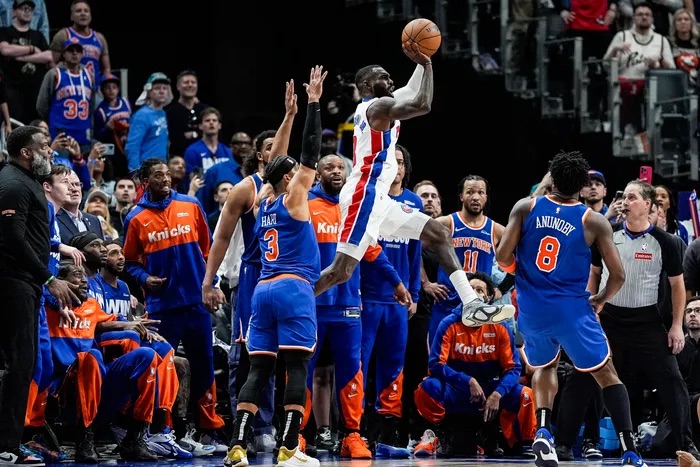
The game between the Knicks and Pistons was tight, with New York holding a double-digit lead in the second quarter only to cough it up in the third quarter and let Detroit take a 7-point lead into the fourth. The Pistons raised their lead to eleven points in the fourth quarter, but they would see the Knicks come back due to clutch shots made by their star players Jalen Brunson and Karl-Anthony Towns. After a three-pointer by the one called KAT gave New York a one-point lead, Detroit coach J.B Bickerstaff called timeout. The next possession for the Pistons resulted in an unfortunate turnover by their star player Cade Cunningham. The Pistons would stop the Knicks on defense and get the ball back, with Bickerstaff calling his team’s final timeout. All the Pistons needed was a two-point shot to win it, with Cunningham missing a mid-range shot, but Tim Hardaway Jr got the rebound after a scramble for the ball and shot it with only a couple seconds of game time left from three-point range. The shot was no good and the game was over. New York had won. Hardaway thought that he had gotten fouled, but the refs did not call it on the floor. And J.B Bickerstaff could not challenge the play. Why? Because he used his challenge on a measly out-of-bounds call in the first quarter. That was a bad move by Bickerstaff, but the official in the corner where Hardaway shot the final shot was not willing to blow the whistle on a shot where clearly contact was made by the Knicks defender Josh Hart. The ball actually rolled in a wild rebound sequence over to Hardaway in the corner and Hart leaned in for the contest and Hardaway shot the ball when Hart made marginal contact with him. The ball went wide of the rim and no call was made. The Knicks actually still had their challenge available, so if it would have been called a foul on the floor Tom Thibodeau would have called timeout and challenged the play. Hardaway could have had three free throws to give Detroit the lead with very little time left if a foul was called. But because the referees cannot review a foul not called on the floor unless a team challenges the play, that was how the game ended. Judgement calls are made every game by the refs and most of them are right. But a small fraction of them are wrong and the fans always harp on the refs when they get a call wrong.
The replay footage would support a foul being called and thankfully the NBA has something called a Two-Minute Report in order to identify any errors made by an officiating crew in a game. The refs in the Knicks-Pistons game immediately admitted that they were wrong not to call a foul on Josh Hart for making illegal contact with Tim Hardaway Jr on the final play of the game. But it didn’t matter. The call wasn’t made, you can’t just go back and finish the game from that point on unless a team directly protests it to the league office and it is very rare when the league office grants those protest requests and the game has to be replayed from the point of the controversial play’s occurrence. This is a playoff series, so that would be impossible. The Pistons didn’t bother to do that and instead had to focus on the fact that they lost two close games on their home floor that they could have won. Game 3 was a tight finish they lost by two points to the Knicks, Game 4 was a one-point margin that was determined by the non-call of a referee that many people will remember for a while. This was just one matchup where a foul not called on the floor occurred and it’s not surprising that the refs let more contact occur in the playoffs without blowing the whistle. Some games you might have a lot of whistles, but other games will yield fewer foul calls. And a day after releasing their mistake in not calling a foul on the Hardaway shot in Detroit, the NBA did the same thing with another game played on that tough Sunday the 27th.
The Los Angeles Lakers were in a must-win situation against the Minnesota Timberwolves, who won Game 3 of their first-round series by a final margin of a dozen points. Anthony Edwards was starting to get going in terms of scoring a load of points to lead his team to important victories. This Game 4 occurred just five days after me and my dad attended Game 2 at Crypto.com Arena in another must-win game which the Lakers won 94-85. Now they faced a similar predicament in going down three games to one in an important game in Minneapolis. The Purple & Gold needed to win this game badly and they needed to take command of this series. The first half was tightly contested, with the lead swinging away from both teams. The Lakers actually held a big lead early on, but the Wolves bit back in the second quarter and would hold a slim three-point lead at the half. The Lakers, wearing their Sunday whites, would take control in the third quarter with a slow start offensively from Minnesota and 36 points scored by them in the quarter. The lead was ten in favor of Los Angeles heading into the fourth quarter, where an odd thing would be noticed. JJ Redick decided to keep the five players that started the second half for the Lakers on the floor for the entire third quarter and the fourth quarter would be no different. The small-ball lineup of Luka Doncic, Austin Reaves, Dorian Finney-Smith, LeBron James and Rui Hachimura would remain on the court for the entire second half. No substitutions off the bench, not even during the timeouts. The strategy seemed to work in the third quarter, but the fourth quarter would unfortunately show a wicked twist for the Lakers in their lineup strategy.
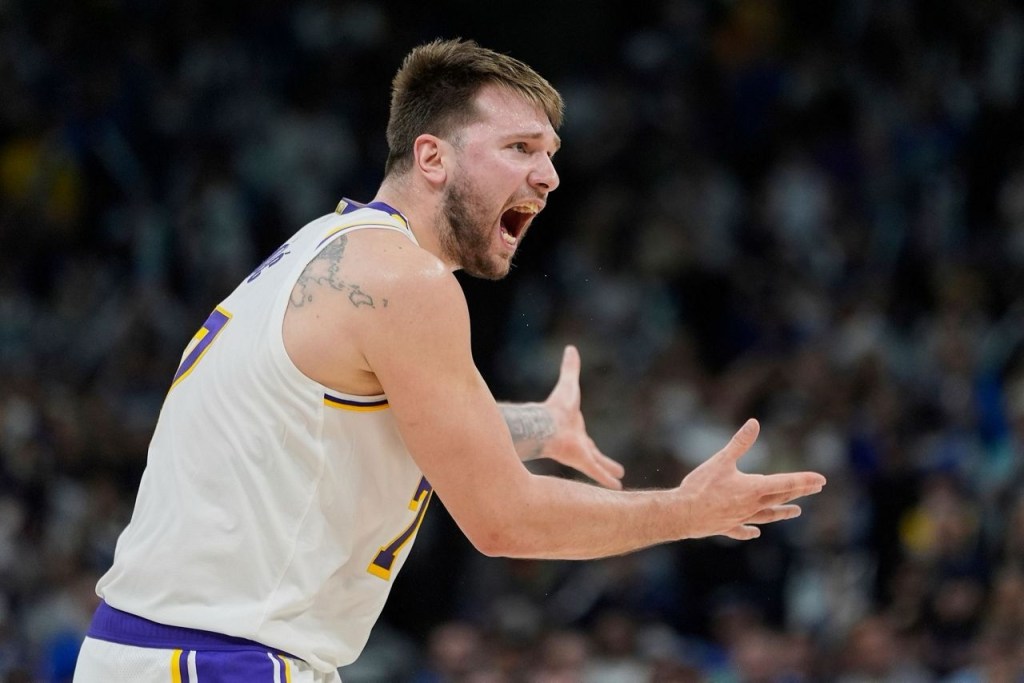
The Ant-Man in Edwards made a load of clutch shots that lowered the lead for the Lakers and he had some help. Jaden McDaniels was having a very solid game as well, making clutch layups and playing good defense as well. Luka was doing all he could to close the game out with the Lakers on top, with him having a 38-point performance with five made three-pointers, but very few rebounds and assists. LeBron was doing the rebounding and assisting along with chipping in 27 points, but none of them were scored in the fourth quarter. The 40-year old legend could have had some time on the bench and a usual guy that comes in for him is guard Gabe Vincent. But there were no subs coming in for the Lakers. In the most cardiac, fast-paced team sport, you need to make substitutions as a head coach. But JJ Redick did not do any of those things. An absolute dumbfounding strategy from the old days of playing basketball with a shoestring roster and only a few key players, but the Lakers have a load of good players. Plenty of key players on the bench, but none of them used. Especially rookie forward Dalton Knecht, who has been getting the benchwarmer treatment ever since he was almost traded to Charlotte in the middle of the season. The trade was rescinded due to the player that the Lakers were supposed to get in exchange for Knecht and another bench player having an injury history that concerned the front office and coaching staff of the Lakers. So, Knecht wasn’t used. Neither were Jordan Goodwin, Vincent, Jaxson Hayes(the starting center for crying out loud) or any other players on the bench for the Lakers. Just total shock there.
In spite of minimal scoring, the Lakers still held the edge all the way until under four minutes left in the quarter. Minnesota had regained the momentum in the game and they would start taking the lead back. In spite of phenomenal shooting performances from Reaves and Hachimura from three-point land, the Lakers defense was crumbling due to the lack of players used in the second half. And yet somehow, the strategy of not making any substitutions almost worked for L.A, which had a couple of three-pointers made by Reaves and Finney-Smith to regain the lead after the Wolves pushed it to four points. An epic block by LeBron occurred on the next possession for the Wolves and the Lakers took back the ball with a chance to push the two-point lead to two possessions. But LeBron took a dumb long three-pointer that he missed and Minnesota got the rebound. McDaniels would get the ball and made a short basket that also came with a foul called on Reaves. McDaniels made the subsequent free throw and the Wolves had a one-point lead. A timeout was not called instantly by Redick as Luka dribbled the ball up the floor. But Doncic was being hounded by McDaniels, who appeared to trip Luka with time running slim. Doncic was down on the floor and no foul had been called on McDaniels by the officiating crew. That forced Redick to call timeout in order for the Lakers to avoid a backcourt violation. McDaniels had been called for fouls twice in the game already for tripping Doncic, who would have been awarded with free throws had a foul been called on this final instance in the fourth quarter. Instead disaster loomed for the tired and worn-out Lakers, who would cough the ball up to the Wolves on a bad inbounds pass thrown by LeBron. On the ensuing must-score possession for Minnesota, LeBron knocked the ball out of Edwards’ grasp and it was ruled a turnover with the ball going off Ant-Man and Lakers possession. But Chris Finch called timeout in order to challenge the play, thinking that LeBron had fouled Edwards when he knocked the ball out of the star guard’s possession. The refs reviewed the play and the replay center deemed that James had made proximate illegal contact when he smacked the ball out of Edwards’ hands, thus calling the foul on LeBron and Edwards would have two free throws at the line. So, that was another replay thing that went against the Lakers, who also lost a timeout because Redick called timeout before Finch called his timeout to challenge the play. Minnesota received their timeout back and the Lakers lost their final timeout. A complete travesty there. Edwards made both free throws and the Wolves led by three. With no timeouts, the Lakers had to force the issue and with little time left the ball got to Austin Reaves, who shot it from the right corner, but the ball went off the rim and was rebounded by McDaniels. Time expired and Minnesota had won. Unbelievable. A complete choke job by the Lakers, who should have won this game if it hadn’t been for a questionable coaching strategy and a couple of rough calls that went against them. And now they are down 3-1 and facing elimination in Game 5 at the CryptoDome. Even if they win, having to go back to the Target Center and win Game 6 would be a daunting task. Especially on shorter rest and Game 7 set to occur probably in a daytime setting a couple days later.
So, the NBA also admitted that they missed a foul call on Jaden McDaniels with roughly 35 seconds left in regulation when Luka Doncic was tripped by him for the third time in the game. The first two were called, but the third one wasn’t because the refs would have been booed to Timbuktu by the rabid Wolves fans, who were already giving the refs a hard time for some foul calls that were either clearly fouls or weren’t. All about “letting them play”, no matter what, unless it’s clearly a foul against your team. Obviously, it’s hard to officiate such a fast-paced sport and Luka said in the postgame press conference on the tripping foul that was not called that he was clearly tripped. Clearly everyone with good eyesight and no deniability can see that. But the refs called nothing. They could have called Doncic for traveling when he fell on the court, but they didn’t do that either. For the league to take a day to review that call and then say “Oops, the refs screwed up on that one” is insulting. Way too late for that and it will only create more animosity and hatred among the Lakers fans who felt like the refs robbed them of a chance of victory. But, make no mistake- JJ Redick deserves the same amount of blame for his lack of changing the bad strategy of playing nobody but the five guys on the court for the entire second half. You can’t expect these guys to grind it out for 24 minutes of game time on the court in a half without subs. So, it’s kind of a 50-50 blame share here between the refs’ calls and Redick’s coaching mishaps. LeBron said that on the foul that was called on him via replay that he thought that “the hand was part of the ball”, but clearly that only goes so far as an argument when you make contact with that hand and knock the ball away. Clearly, the rules are stacked against players on defense in every sport, not just basketball. Still, if the McDaniels tripping foul on Doncic is called and Luka gets two free throws, he assumably makes them both and the Lakers reclaim the lead. The question is whether the next possession for Minnesota would end any differently. It probably could have ended with a miss or a made shot. But the challenge by Minnesota on the Edwards-LeBron slap incident could have been prevented in all likelihood and the Lakers would still have their timeout. That the refs allowed the Lakers to call timeout should have negated Finch from challenging that play, but apparently if you get your challenge request in within 30 seconds of the play ending, then the refs are obliged to review that play. That is completely absurd. A timeout by the opposing team should kill any opportunity that the other team should have to initiate a challenge. But apparently that’s not the case. So, that’s too bad.
The loss by the Pistons might be more egregious for an officiating gaffe due to the non-call on Josh Hart fouling Tim Hardaway Jr. Because of that decision, Detroit now has to go to Madison Square Garden to win a game against the Knicks, who have not won a playoff-series clinching game on their home floor since 2000. But the Pistons might be overmatched and they should feel like that they could be up 3-1 or the series should be tied. But they have to fight and win in Manhattan like they did earlier in the series in order to stay alive. All in all, the referees carry a lot of weight to decide the outcome of a game and if they screw up, teams’ seasons end or are in jeopardy. That’s the case in the playoffs for the Detroit Pistons and Los Angeles Lakers, who might not be able to overcome their respective 3-1 series deficits against their opponents. Tough luck indeed. Hopefully less of this stuff will happen in the future, but there’s no guarantee of that. It all comes down to whether a team has a challenge to overturn a controversial call or not. Never before has such a thing been the case in a sports league, but these past few years that has been the status quo of the NBA, which has some of the most famous athletes in the world but even they are shown to be mere mortals when it comes to not having complete control of everything that happens in a game environment.
 Kent Bewley's News Story Collection
Leave a comment